
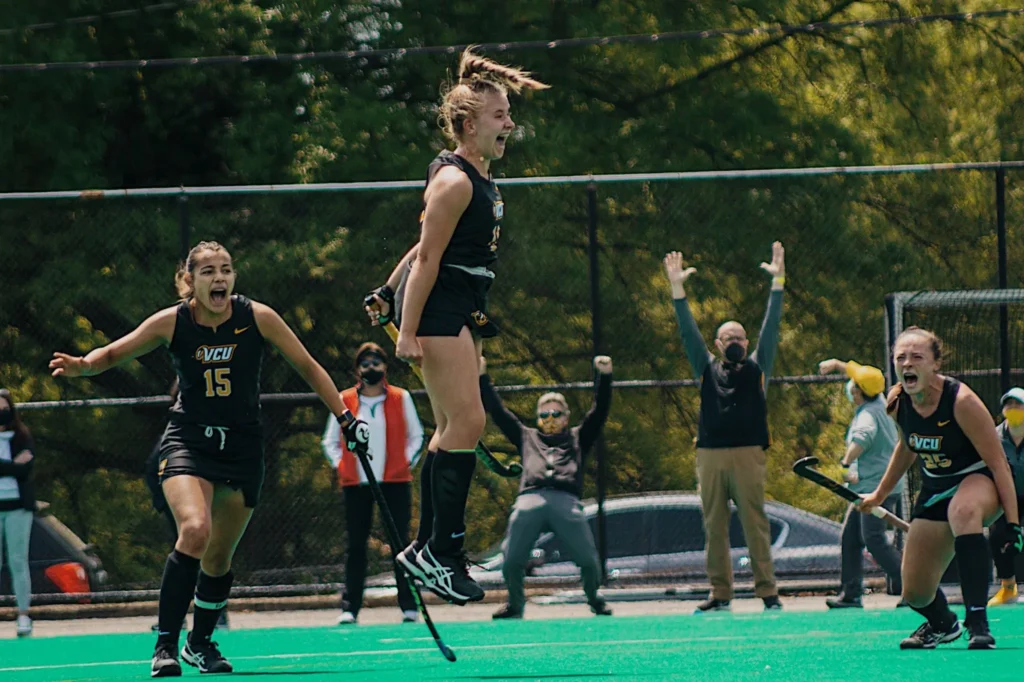
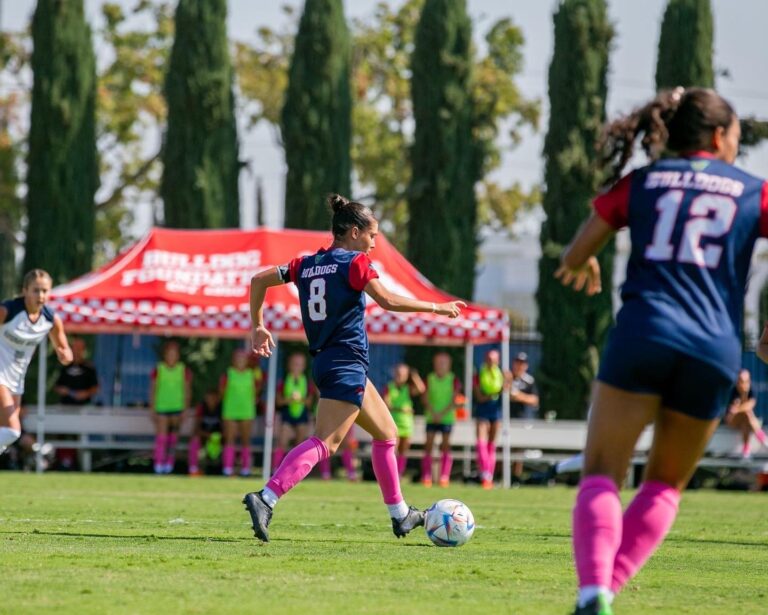


The Opportunities for Female College Athletes in the US
Scholarships, Resources, and Support for Women in College Sports
Over the past decades, women’s sports have grown rapidly, especially in college sports. Female college athletes now have more opportunities, and the future continues to look very bright.
For many international athletes, both male and female, the American college system offers something very different from their home countries. Athletes train in a professional environment while earning a university degree. Teams have full coaching staffs, strength and conditioning coaches, medical teams, and access to facilities right on campus.
Financial support is another key factor. Many athletes receive sports scholarships, which help cover expenses while competing and studying in the U.S.
Support for female athletes continues to grow, with stronger programs, increased funding, and greater visibility. But the system didn’t always look like this.
In this article, we give you a brief history of college sports in the U.S., the impact of Title IX, the growth of women’s college sports programs, and experiences from female college athletes.
A Short History of College Sports
College sports as we know them today did not originally start in the United States. Early university sports programs developed in the United Kingdom, where students at universities like Oxford and Cambridge formed dedicated teams.
These programs were mainly for men. The same pattern followed when college sports expanded in the U.S. in the late 1800s and early 1900s. For decades, men’s sports dominated university athletics. Women’s teams existed but often had fewer resources and limited access to competition. That began to change after Title IX.
The Turning Point – Title IX
In 1972, the United States passed Title IX, a federal law that prohibits gender discrimination in any education program receiving federal funding.
In college sports, this means colleges and universities must provide equal access for male and female athletes. That includes scholarships, facilities, coaching, and competition.
Title IX pushed universities to invest in women’s sports and expand programs. More teams were added, scholarships increased, and participation grew across sports such as soccer, basketball, volleyball, swimming, and track and field.
Before Title IX, fewer than 30,000 women competed in college athletics. Today, female athletes are a central part of the U.S. college sports system. In March 2026, the NCAA reported that more than 240,000 female student-athletes competed in women’s sports during the 2024–2025 academic year – a number that continues to rise each year.
Visibility in Women’s Sports
Visibility has also fueled the growth of women’s sports. Historically, women’s sports received far less media attention than men’s sports, but that has started to change in recent years. Women’s college sports are attracting larger audiences and more media coverage.
Another major development came with NIL rules in 2021. NIL (Name, Image, and Likeness) allows college athletes to sign sponsorships, promote brands, and monetize their social media while still competing. Several female athletes have built strong personal brands and reached some of the highest NIL valuations in college sports.
Top female NIL athletes include:
- Flau’jae Johnson: Basketball (LSU) – $1.5M NIL valuation
- Aaliyah Chavez: Basketball (Oklahoma University) – $1.5M NIL valuation
- Kai Trump: Golf (University of Miami) – $1.2M NIL valuation
Data and Stories of College Female Athletes Thriving in U.S. Colleges
For Keystone Sports, the impact on college female athletes in the U.S. is clear. Data from our Class of 2025 report shows that 73% of the full-ride scholarships secured by Keystone athletes went to women, and 22% of all female athletes received a full-ride scholarship.
For many of these athletes, the biggest adjustment when moving to the U.S. is the level of support college programs provide. Beyond scholarships, athletes gain access to top training facilities, experienced coaches, sports medicine, nutrition planning, and academic assistance – all under one roof.
With daily training and competitions across the country, the U.S. system offers a structure and investment that is difficult to match in traditional European club setups.
Spanish soccer player and former student-athlete Lorena Montañés describes the experience:
“When I arrived in California, I was impressed by the level of resources and support available to us. In addition to the coaching staff, we have a team of trainers, strength and conditioning coaches, nutritionists, sports psychologists, as well as a media team.”
She also highlighted the financial support and professional approach:
“College soccer scholarships for women open doors to a more professional athletic experience. As a DI women’s soccer player, I felt for the first time as a professional athlete.”
Helena Robla, former Northern Arizona University swimmer, explains the opportunities college sports offer female athletes:
“Decades ago, combining elite sport and higher education wasn’t always accessible to women in the same way it is now. Today, college swimming in the U.S. offers female athletes a structured, supportive, and empowering path forward.”
Their experiences reflect what many international athletes discover when they arrive in the U.S.: a system built to support the whole athlete — not only in sport, but in everything surrounding it.
Opportunities and Support in Women’s College Sports
Female participation in U.S. college sports has grown dramatically over the past decades. While progress continues, the college system is already one of the strongest environments for women to develop both athletically and academically.
Women’s college sports allow talented female athletes to study and compete, which is an opportunity that is often hard to find in other countries. Curious about your own path and what’s possible? Take our free assessment and find out now!
Share this article:
About the author
Paulina Romo
Paulina Romo, Communications Manager at Keystone Sports, holds a Master’s degree in Business Administration and has a background in equestrian sports, specializing in dressage. Shaped by international experience gained from work and studies in Sweden, South Korea, Germany, and Spain, Paulina brings a diverse blend of marketing skills and perspectives to her role.
More related articles

What are College Esports Scholarships, and How Can You Secure One?
Esports has skyrocketed in popularity and has evolved into a competitive sport. The exciting news? U.S. universities are now offering scholarships for esports players! In this article, you’ll get all the details on how to secure a college esports scholarship.
How to Get a Rugby Scholarship in the US
With the growing popularity of rugby in American universities, more opportunities are becoming available for international students to obtain rugby scholarships. Here’s everything you need to know about scholarships for rugby and how to get one!
Your Guide to Transfer Universities as a Student-Athlete
Transferring universities as a student-athlete can be a complex process, but with the right support, it’s an opportunity to elevate both your academic and athletic career. Keystone Sports simplifies every step of the process to find your perfect fit!