

A Week in My Life as a College Soccer Player in the USA
A behind-the-scenes look into the weekly routine of a Division I soccer player
For many athletes dreaming of playing college soccer in the United States, it’s hard to imagine what a weekly routine actually looks like once you get there.
To give a real picture, we spoke with Daniel Helle, a Danish soccer player competing at St. Bonaventure University in NCAA Division I. Daniel earned his place through a soccer scholarship with Keystone Sports, and his journey reflects what hundreds of international athletes experience every year.
In this article, Daniel walks us through his weekly routine as a college soccer player in the USA.
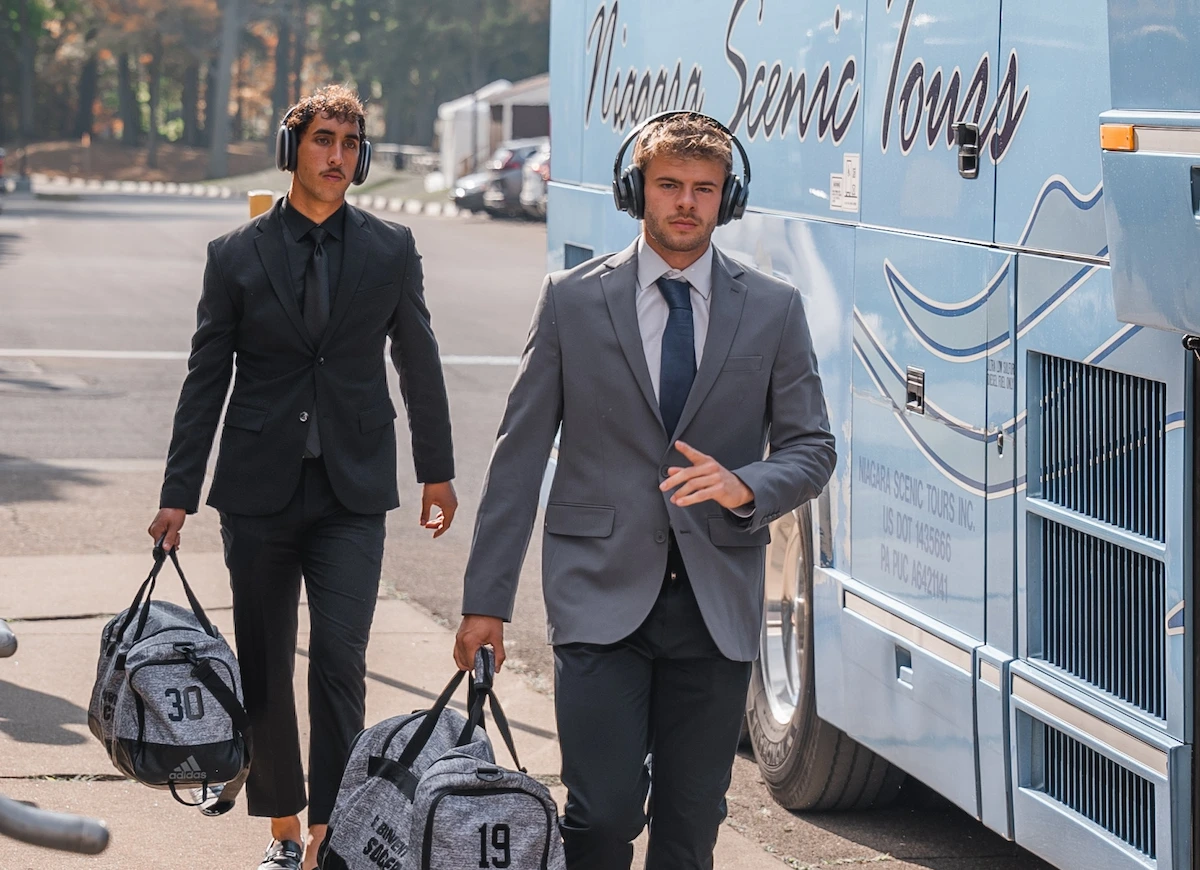
When people ask me what my week looks like as a college football player, I realize just how much my daily life is built around routines. For me, it’s not just about the games or the big moments — it’s about everything in between: the mornings, the transition from training to classes, recovery, and the way the team works together.
Early Mornings and Training Blocks
My day starts early. I usually get up around 5:45 because we always have to be in the locker room half an hour before anything on the schedule. If we have film, lifting, or training at 7, there’s no discussion — you need to be ready by 6:30. I’ve gotten used to it, but it still requires being efficient in the morning. I eat almost the same thing every day: a bagel and a quick snack I can take with me, because I’ve learned how important it is to fuel your body before physical activity.
The first thing we usually do is video or what our coach calls “opposition scout.” It was a completely new concept for me since I never did anything like that back in Denmark, so it took some adjusting. Here, it’s totally normal to watch clips of our team and our opponents.
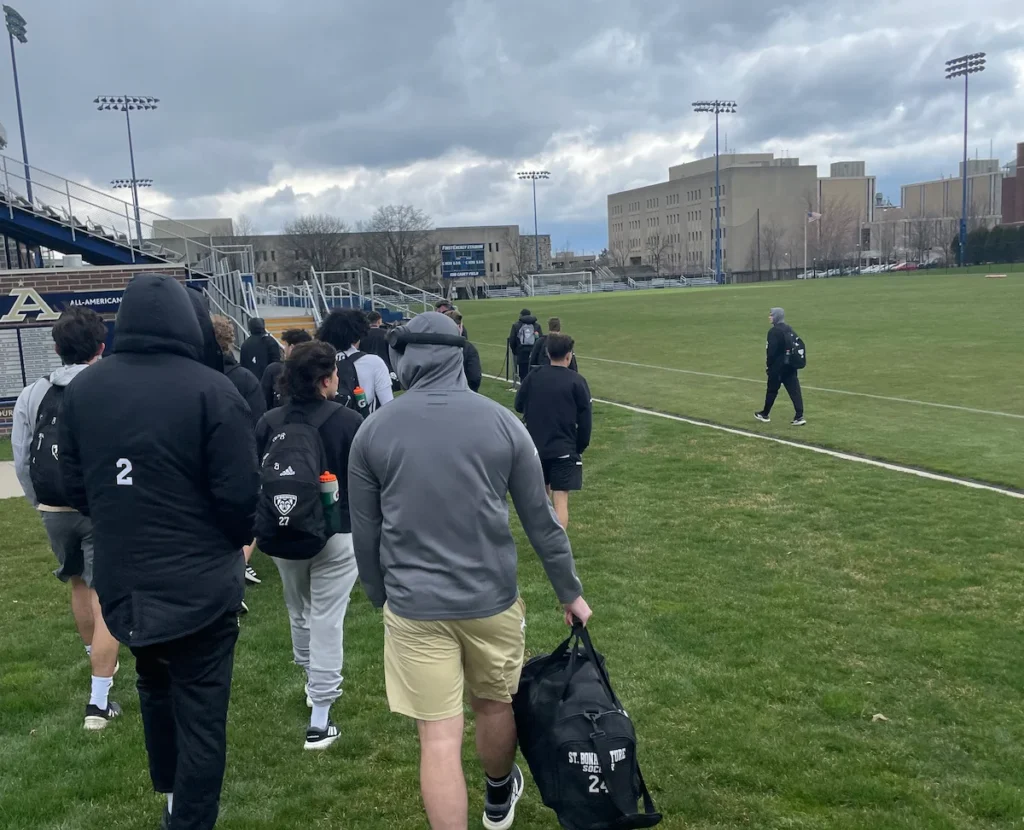
Then we go straight to strength training. After that, at 8:30 we’re out on the pitch, and that’s when my favorite part of the day begins: actual soccer training. Training here is more physical than what I was used to at home. Everything is high tempo, and we get pushed in most drills. It’s tough, but it’s also the part that gives me the most energy.
After a morning block with three things back-to-back, you’d think you’d be exhausted, but you learn to get into a flow where you take things one step at a time.
Academics and Social Life
When we finish on the pitch, I usually have 15–30 minutes before my first class starts at 10:00. It’s just enough time to shower and change into dry clothes. That’s also when I feel the contrast between sport and school the most. You sit in class trying to listen while your body is still warm, and your head is buzzing from training.
I have two classes a day: 10:00–11:20 and 11:30–12:45. Academics here are, in my opinion, less demanding than the level I would have had in Denmark. Classes are shorter and the homework is manageable. It makes it possible to focus more on football without hurting your education.
When I’m done a little before 1 p.m., the rest of the day almost feels like bonus time. I eat lunch, and then it depends on how my body feels. If I’m sore, I do some recovery—foam roller, ice bath, whatever is needed. If I’m not too tired, I go to the library, work on assignments, or hang out with friends. It’s nice knowing I have the afternoon free, even if the morning training block is tough.
Preseason Intensity and Match Prep
Before the season starts, midweek is definitely the most physically demanding part. That’s when we have competition training, where everything is about winning internal games, and the losing team does extra running. The intensity is high, and it’s the day you feel the most pressure. It’s usually three days before the game, so the coaches want us to hit a physical peak before we start tapering off again.
As we get closer to the weekend, training becomes lighter and more tactical. This is when we work on details: formation, set pieces, and how we want to approach the match.
A funny detail is that we have to train in shin guards and long socks every day except the day before a match. It makes training feel a bit different, so it is always a bit more relaxed.
On Season Schedule: Gamedays and Recovery
During season, we have two matches per week. Wednesdays and Saturdays are gamedays, and they’re the times I always look forward to the most.
If we have a match on Saturday, Sunday isn’t just a day off. Players who had many minutes on the game, they do recovery, while the rest get a very intense session. It makes sense — everyone needs to maintain their fitness. It also means our only regular day off is Monday. That’s the day you can sleep in, catch up on schoolwork, and let your body settle.
When I look at my week as a whole, it’s a very fixed rhythm, but I’m okay with that. It’s tough, but it’s meaningful. You grow close with your teammates because everyone lives the same lifestyle. I’m developing physically and mentally, and I know I’ll look back on this time as something that taught me a lot.
Do You Want to Play College Soccer in the USA?
Daniel’s week gives a clear picture of what life as a Division I student-athlete is really like. It’s demanding, but it’s also an incredible opportunity to grow, compete, and experience a new culture while earning a university degree.
If you dream of following a similar path, Keystone Sports is here to guide you. As the leading agency for student-athlete placements, we’ve helped thousands of players earn soccer scholarships at U.S. colleges. Our team supports you through every step: from creating your profile and contacting coaches, to scholarship negotiations and preparing for your move to the US.
Ready to find out about your chances? Complete our free evaluation and take the first step toward your college soccer journey.
Share this article:
More related articles

What are College Esports Scholarships, and How Can You Secure One?
Esports has skyrocketed in popularity and has evolved into a competitive sport. The exciting news? U.S. universities are now offering scholarships for esports players! In this article, you’ll get all the details on how to secure a college esports scholarship.
How to Get a Rugby Scholarship in the US
With the growing popularity of rugby in American universities, more opportunities are becoming available for international students to obtain rugby scholarships. Here’s everything you need to know about scholarships for rugby and how to get one!
Your Guide to Transfer Universities as a Student-Athlete
Transferring universities as a student-athlete can be a complex process, but with the right support, it’s an opportunity to elevate both your academic and athletic career. Keystone Sports simplifies every step of the process to find your perfect fit!